
I know it may sound silly at first, but as the wedding day approaches, many brides ask themselves when the best time to wash their hair is. Experts at Fresha enlighten us below:
Short answer: The evening before can work well for many bridal styles, but your hair type matters more than a strict 24-hour rule.
Washing your hair the evening before your wedding can take one job off the morning’s schedule. However, leaving it unwashed for several days or adding a last-minute intensive treatment could make it harder to achieve the style you want.
For brides getting married this autumn or winter, Danielle Louise, hair and beauty expert on Fresha, the world’s leading AI-powered booking platform for beauty and wellness, recommends using the bridal hair trial to agree on a washing and treatment routine.
Her advice is to work backwards from the chosen hairstyle, allowing enough time for washing, thorough rinsing and any drying needed before the appointment.
“The evening before is a good starting point for many brides because it gives you time to prepare your hair without rushing on the wedding morning. But if your roots become oily overnight, or you are wearing your natural curls, your routine may need to be different. The best timing is the one you have tested with your stylist.”
Do you really need unwashed hair for a bridal style?
The idea that dirty hair always holds a style better is too simplistic. Hair texture, scalp oiliness and the intended look all influence how it should be prepared. Several days of oil, dry shampoo and styling products can leave hair weighed down rather than easier to work with.
For someone whose roots become greasy quickly, washing on the wedding morning may be more suitable, provided there is enough time to dry it or a blow-dry is included in the appointment. The stylist can then use products suited to the texture and the hold the finished look needs.
Brides wearing natural curls or coils should agree their preparation with a stylist experienced in their hair texture. There is no need to automatically abandon familiar leave-in products or straighten the hair before an appointment.
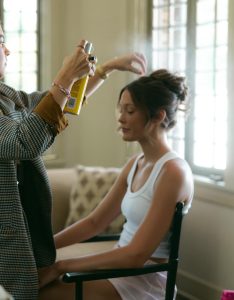
Keep the final wash familiar
Once a routine has worked at the trial, repeat it before the wedding. That includes taking your usual shampoo and conditioner if you are getting ready at a hotel or staying away from home.
For hair that becomes weighed down easily, applying rinse-out conditioner mainly through the lengths and ends can help avoid coating the roots. Rinse thoroughly, paying attention to areas that are easy to miss, such as underneath thick hair and around the nape.
Follow the stylist’s drying instructions, too. If the appointment is for styling dry hair, arriving with damp roots can add an unexpected job to a tightly planned morning.
Avoid an unfamiliar intensive treatment at the last minute
A wedding is not a reason to stop conditioning your hair. However, suddenly switching to a richer mask, using a generous amount of oil or leaving a treatment on longer than directed can change how it feels and behaves.
Some products may leave fine hair feeling coated or heavy, particularly if they are not fully rinsed out. Any new treatment is better tested well before the wedding, with the final routine agreed at the hair trial.
The same planning applies to salon services. A treatment should address the hair’s needs and work with the intended bridal style.
| Treatment | How to plan it |
| Moisturising mask | Try it during your normal routine well before the wedding, then agree with your stylist whether to use it for the final wash. Follow the product’s instructions. |
| Salon conditioning treatment | Discuss dryness, color damage and your intended hairstyle with your hairdresser so the treatment suits your hair. |
| Gloss or toner | Agree the timing with your colorist and keep your bridal stylist informed of any planned color changes. |
| Keratin or chemical smoothing service | Discuss it well in advance, ideally before the bridal trial, so the hairstyle can be tested after the treatment. |
For autumn and winter weddings, think about your coat as well as your veil.
Damp weather, wind and dry indoor air can present different styling challenges. They do not create a separate washing rule, but they are worth discussing when planning the finished look.
Let the stylist know about outdoor photographs, walks between venues and any coat, cape or wrap you intend to wear. High collars and clothing that must be pulled over the head should be considered when deciding how to position and secure the hair.
Bring the veil and hair accessories to the trial, and ask how to remove them without disturbing the style. It is also useful to agree which touch-ups you can manage yourself and whether any loose sections would benefit from extra securing.
An umbrella or covered route between venues can help protect the finished hair during outdoor transfers.
Danielle’s final recommendation is to keep a record of the preparation that worked:
“Write down when you washed your hair, which products you used and how it was dried before the trial. If you were happy with how the style held, you have a clear routine to follow when the wedding week gets busy.”
If you are planning a wedding in Roanoke, Richmond, Fredericksburg/Northern Virginia, The Shenandoah Valley, Coastal Virginia, or Charlottesville/ Lynchburg, Virginia, we can help with your wedding planning and ideas.